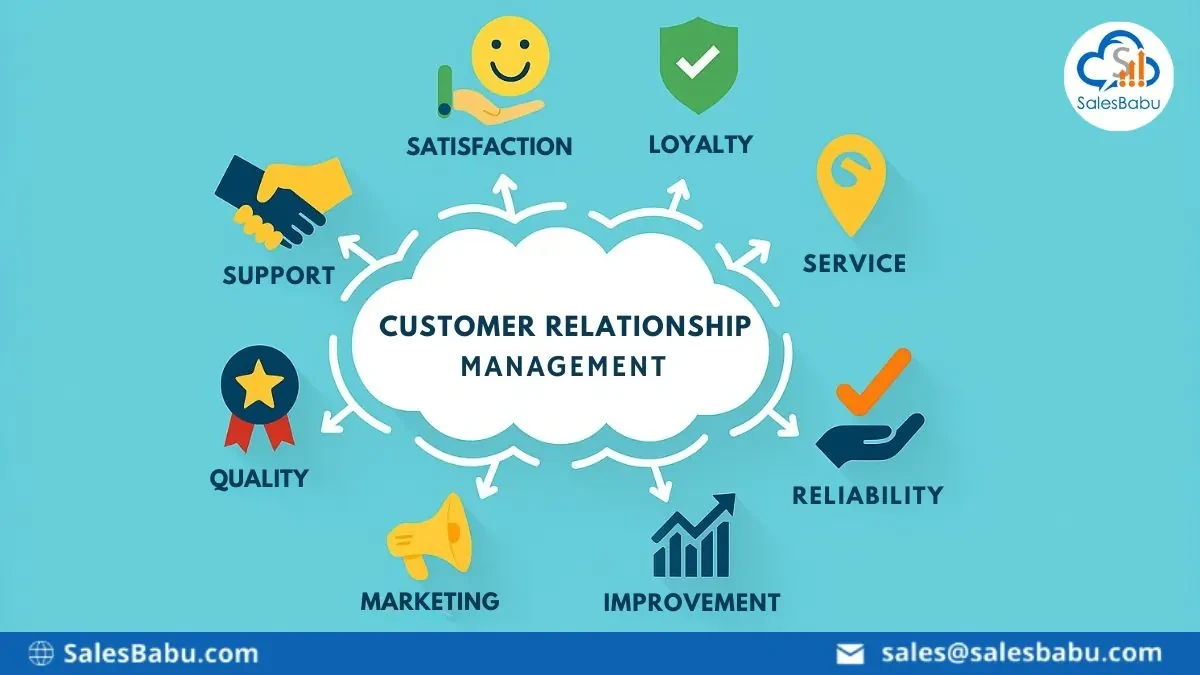
CRM manages customer relationships by consolidating every interaction, purchase, and communication channel into a unified profile that guides long-term business strategy across the entire customer lifecycle. By maintaining a shared history of touchpoints across sales, marketing, and support teams, the system ensures that staff understand each customer’s specific context rather than treating each interaction as an isolated transaction.
How CRM systems build and maintain customer relationships
CRM is a business strategy centered on maximizing the value of customer relationships over their entire lifecycle instead of optimizing standalone sales transactions. The software works as a central hub that stores contact records, automates outbound communications, and manages the sales deal pipeline. When marketing, sales, and service departments work from the same profile, every employee sees identical account details during daily handoffs.
Collaborative CRM capabilities connect communication channels across departments to keep account context intact. When a sales representative closes a contract, details about the client’s goals and agreed terms carry directly into onboarding and customer service queues. Without this shared visibility, value leaks from the relationship because support teams lack context, or service agents miss commercial expansion opportunities.
Automated record tracking also overcomes human biological limits. Human cognitive capacity naturally caps stable social relationships at approximately 150 connections, a threshold known as Dunbar’s number. A company managing hundreds or thousands of buyer relationships cannot rely on staff memory or personal notes to sustain rapport. As organizations expand, automated tracking logs account milestones so teams can spot opportunities earlier. Whitney Summers, Associate and Senior Marketing Manager at DTJ Design, highlighted this shift: “We needed a system that would help us see opportunities sooner and nurture them consistently. HubSpot gave us that — and more.”
Customer touchpoints and interaction records tracked in CRM
Every point of contact between a buyer and a company shapes brand perception, offering direct chances to build trust, secure repeat orders, and prevent dissatisfaction. Standard conversion tracking records only whether a visitor reached a final transaction step. In contrast, customer journey tracking in a CRM logs the complete chronological sequence of interactions across sessions, giving companies full context on how prospects evaluate products over time.
Modern CRM platforms assemble fragmented data streams into a single contact record. Tools such as HubSpot CRM’s Contacts & Companies record organize individual profiles alongside communication preferences and personal notes. A unified record captures distinct operational data points across each phase:
- Digital journey events: Specific page visits, email opens, marketing link click-through rates, and download conversions that show buyer intent.
- Direct communication records: Inbound phone call summaries, outbound sales emails, chat transcripts, and active customer support tickets.
- Direct customer feedback: Customer satisfaction survey responses, submitted website inquiries, and online reviews attached directly to the user profile.
- Sales milestones: Deal pipeline stages, product interest markers, pricing quotes, and historical transaction logs.
Dashboards like NetSuite’s CRM Dashboard aggregate these data points to display customer activity and service history in real time. Instead of searching through separate spreadsheets, support and sales reps view account health, previous friction points, and preferred communication methods before contacting a client.
Driving customer retention and long-term loyalty with CRM data
Maintaining existing accounts protects revenue. Software research organization Capterra found that 47% of surveyed CRM users cite the software as a major factor in customer retention, and an identical 47% report that it increases customer satisfaction. As the ServiceNow CRM customer retention guide notes, “Getting ahead of issues is always cheaper than recovering from them.” Unified customer records prevent the friction that occurs when customers must repeatedly explain their history to different support representatives across phone, chat, or email channels.
Proactive service turns difficult operational moments into long-term loyalty. Consider a service recovery scenario: a commercial customer calls a software vendor after a critical reporting feature fails following a software update. Under a disconnected system, the representative might ask the customer to verify their account tier, restate past tickets, and wait for internal escalation. With a centralized CRM, the representative opens the client profile and immediately sees past purchase records, active contract terms, and an open ticket logged thirty minutes earlier by the technical team. The agent acknowledges the disruption immediately, applies a contractual credit without making the customer negotiate, and routes the ticket to senior engineering. Once the bug is fixed, the CRM triggers an automated follow-up workflow that emails the client with resolution notes, schedules a check-in call three days later, and alerts the account manager. This systematic response resolves the immediate frustration and secures an account that was at risk of canceling.
Beyond single incidents, automated platform workflows reduce churn before customers drift toward competitors. Automated segmentation and usage monitoring identify accounts that stop logging in or fail to complete onboarding steps, triggering check-in alerts for account managers. These analytics also monitor expansion signals, directing sales teams toward upsell and cross-sell opportunities at opportune moments. This targeted attention reflects the Pareto Principle, where 20% of customer accounts typically account for 80% of total revenue and engagement.