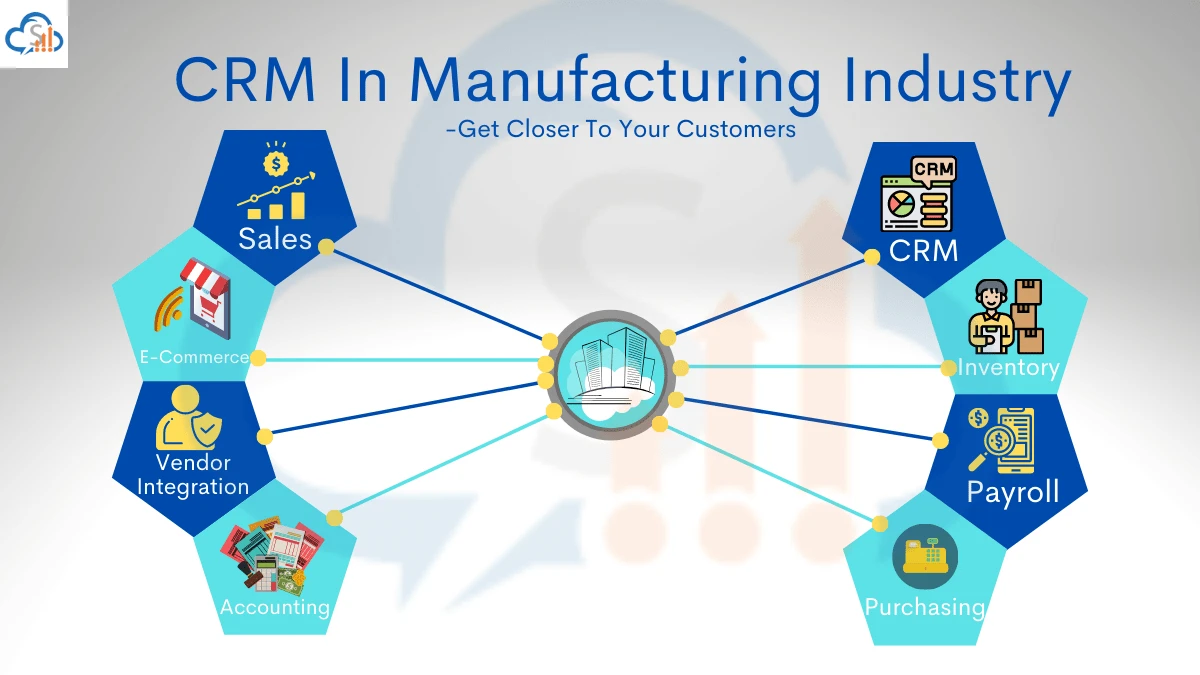
Microsoft Dynamics 365 is the top choice for discrete manufacturers operating within Microsoft enterprise environments. Salesforce Agentforce Manufacturing leads for large global enterprises managing complex dealer networks and long-term sales agreements. NetSuite is best for midmarket organizations seeking an integrated cloud ERP and CRM platform. These eight platforms were evaluated based on their native ERP integration depth, support for distributor and CPQ workflows, and long-term total cost of ownership.
Top CRM Platforms for Manufacturing Businesses
Microsoft Dynamics 365
Microsoft Dynamics 365 suits enterprise discrete manufacturers that require tight operational alignment between customer records and back-office production. The platform connects front-office sales pipelines with field service, finance, customer support, and supply chain tracking around shared operational processes. For organizations running native Microsoft enterprise environments, Dataverse dual-write synchronization enables near real-time, bidirectional data exchange between CRM entities and ERP production tables without custom data pipelines.
A primary operational advantage is asset lifecycle visibility. Manufacturers managing warranty claims, equipment tracking, and preventative onsite servicing can deploy Dynamics 365 Field Service alongside core sales modules. The main drawback centers on implementation complexity. Configuring Dataverse dual-write tables and aligning custom ERP schemas requires specialized implementation partners like AlphaBOLD, which adds significant consulting fees and extended deployment schedules before teams go live.
Salesforce Agentforce Manufacturing
Salesforce Agentforce Manufacturing is designed for large manufacturing enterprises managing multi-tier distribution networks, run-rate agreements, and long-term volume forecasts. More than 20,000 manufacturers, including Belden, GE Appliances, and Endress+Hauser, use Salesforce to maintain commercial visibility across global sales operations. The platform connects customer records, physical assets, and product master data across ERP, PLM, IoT, and external partner networks into a governed workspace without moving the underlying data.
The system excels at converting sales agreements into accurate production forecasts, helping account managers monitor volume commitments against actual order performance. However, Salesforce Agentforce Manufacturing is oversized and cost-prohibitive for small and midsize plants. Deploying and maintaining the software demands certified administrators and internal IT support to manage custom object schemas, security profiles, and third-party system connections.
NetSuite
NetSuite is best for midmarket and enterprise global manufacturers wanting an integrated cloud ERP and CRM platform on a single database. By housing sales tracking and enterprise resource planning within one data architecture, NetSuite avoids the synchronization lag common in multi-vendor tech stacks. The software covers core production workflows, including order management, procurement, shop floor control, and supply chain tracking, alongside standard lead and opportunity pipelines.
Pricing checked in November 2026 starts with a base platform license at $999 per month, with additional user access fees ranging from $99 to $149 per user per month under mandatory annual contracts. The primary drawback is this rigid commercial commitment and high entry price. Small fabricators and specialized machine shops cannot justify the upfront licensing commitment, especially when their immediate requirements focus on contact tracking rather than full shop-floor operational control.
Infor CRM
Infor CRM suits industrial manufacturers operating within the Infor enterprise ecosystem that must respond quickly to changing customer specifications, supplier mandates, and regulatory compliance standards. The platform delivers native, out-of-the-box integration with Infor manufacturing ERP solutions, Birst Networked BI, and the Infor Customer Experience Suite. This native connectivity gives sales representatives immediate visibility into back-office production schedules, warehouse inventory, and invoice histories without custom middleware.
The main drawback is Infor CRM’s dated user interface and restricted third-party ecosystem. User adoption suffers from an unintuitive interface design and steep employee training demands. In addition, the platform offers poor out-of-the-box connectivity for businesses running non-Infor accounting or ERP backends, making it an impractical choice for facilities operating mixed-vendor software environments.
Tribe CRM
Tribe CRM serves European manufacturing small and midsize businesses that prioritize regional data sovereignty and straightforward commercial workflows. The platform has European cloud hosting with GDPR compliance built into its architecture, serving over 5,200 European businesses across manufacturing and adjacent industries. Tribe synchronizes commercial relationships, product catalogs, sales orders, invoices, and live stock levels directly with Microsoft Business Central and Exact Online, where Exact Online Handel adds stock and price list synchronization.
For custom fabrication workflows, Tribe connects with configure, price, quote tools like Merkato through an open API to push customized product specifications and calculated pricing directly into deal records and ERP sales orders. Its marketplace also features connectors for SnelStart and Odoo. The main limitation is Tribe’s regional focus; it lacks the pre-configured enterprise supply chain tools and global multi-entity structures required by multinational industrial conglomerates.
Pipedrive
Pipedrive suits engineer-to-order manufacturers and custom fabricators that require visual pipeline management without enterprise software overhead. The CRM connects with external inventory, accounting, and ERP systems such as SAP, NetSuite, QuickBooks, and Xero through native marketplace integrations and open APIs. Sales teams can track distinct revenue streams by configuring multi-channel pipelines that separate direct OEM contracts from wholesale and distributor deals.
Engineering and sales collaboration takes place directly within the deal card interface. Teams can attach technical CAD drawings, custom quotes, and product specifications to active opportunities, assign estimate tasks to engineering staff, and automate follow-up reminders. The primary drawback is Pipedrive’s seat licensing policy: the vendor bills for every provisioned user seat regardless of whether an employee is actively logging in, which inflates monthly costs if admin overhead is neglected.
Creatio
Creatio is built for midmarket manufacturers that manage structured, process-intensive sales operations. The platform uses a no-code process automation engine that allows operations teams to design custom qualification paths, multi-step proposal approvals, and distributor onboarding workflows without writing software code. Published pricing starts at $40 per user per month across three subscription tiers: Growth, Enterprise, and Unlimited.
This no-code flexibility allows manufacturing operations managers to adapt pipeline stages to complex bidding cycles and technical compliance checks. The main operational drawback is that Creatio does not include turnkey connectors for legacy industrial ERP platforms. Establishing bidirectional inventory tracking, sales order generation, and real-time ledger updates requires configuring external REST APIs or deploying third-party integration middleware.
Zoho CRM
Zoho CRM gives an accessible starting point for small manufacturing operations, job shops, and fabrication businesses operating under strict software budgets. Pricing starts at $14 per user per month, with a free plan available. The platform handles fundamental pipeline tasks, customer communication logs, and basic quote generation with minimal onboarding overhead.
Small teams can link Zoho CRM directly with Zoho Inventory to view warehouse stock levels and generate standard sales orders from won deals. The main drawback is vendor lock-in. Real-time inventory tracking and order fulfillment capabilities operate smoothly only within the proprietary Zoho application suite. Manufacturers running third-party ERP databases face weak native connectors and must build custom webhooks to move transactional order data.
Comparing ERP Integration and Features Across Manufacturing CRMs
In mixed-vendor factory environments, synchronizing disconnected software requires integration middleware such as Azure Integration Services, MuleSoft, or Boomi. These integration platforms prevent data discrepancies and order processing delays, but they alter project economics. True total cost of ownership extends far beyond list subscription rates. A midmarket manufacturer paying $40 per user per month on subscription licenses often spends significantly more on upfront implementation consulting, legacy data migration, recurring employee training, and ongoing middleware licensing.
Platform |
Best-Fit Manufacturing Model |
ERP Integration Architecture |
Key Manufacturing Capability |
Operational Trade-off |
|---|---|---|---|---|
Microsoft Dynamics 365 |
Discrete manufacturing within Microsoft environments |
Dataverse dual-write bidirectional synchronization |
Field service, asset warranty, and supply chain tracking |
Requires specialized implementation partners like AlphaBOLD |
Salesforce Agentforce Manufacturing |
Large global enterprises with multi-tier distribution |
Governed zero-copy multi-source data connection |
Run-rate agreement tracking and dealer network management |
Oversized and expensive for small and midsize teams |
NetSuite |
Midmarket to enterprise global manufacturing |
Single unified cloud ERP and CRM database |
Shop floor control, procurement, and order management |
Base license starts at $999/month plus annual commitment |
Infor CRM |
Industrial manufacturing running Infor systems |
Native Infor ecosystem and Birst BI integration |
Rapid compliance and supplier requirement response |
Dated user interface and poor third-party integration |
Tribe CRM |
European small and midsize manufacturing |
Native Business Central and Exact Online sync |
Merkato CPQ integration and live stock synchronization |
Regional European focus lacking global enterprise tooling |
Pipedrive |
Engineer-to-order and custom fabrication shops |
Native accounting connectors and open REST APIs |
CAD attachment, technical quotes, and visual deal cards |
Mandatory billing for all provisioned seats |
Creatio |
Process-driven midmarket manufacturing |
Open APIs and third-party middleware connections |
No-code custom pipeline and approval automation |
Requires external middleware for real-time ERP inventory |
Zoho CRM |
Small machine shops and entry-level operations |
Proprietary Zoho Inventory sync and webhooks |
Low-cost pipeline tracking and basic sales orders |
Inventory visibility confined to the Zoho ecosystem |