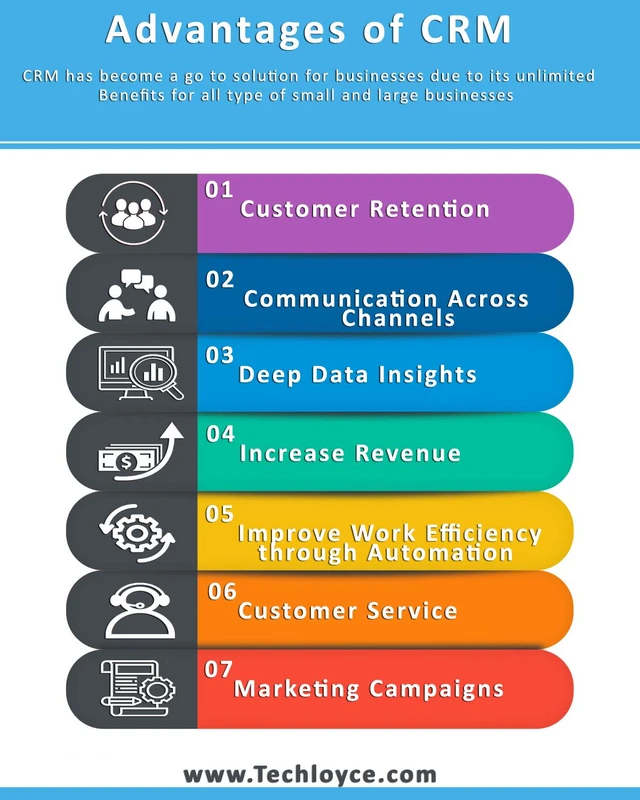
CRM software generates measurable business return by centralizing customer records into a single source of truth and automating coordination across sales, marketing, and service teams. By tracking the complete customer lifecycle within one platform, organizations eliminate cross-departmental data silos, automate routine follow-ups, and accelerate pipeline velocity while actively mitigating customer churn.
Direct commercial and operational benefits of CRM software
A CRM system delivers commercial value by consolidating customer interactions, purchasing records, and preferences into an accessible repository for every customer-facing team. When sales, marketing, and support representatives draw from isolated spreadsheets or personal email threads, communication fractures. Bringing account history together removes these internal data silos, ensuring that staff interact with clients using identical, up-to-date context.
Beyond daily record-keeping, centralized platforms capture buying patterns and behavioral trends that inform strategic decisions. Leadership can analyze which customer segments purchase most consistently, how buying behaviors change over time, and where commercial resources yield the highest returns. This analytical visibility allows companies to allocate marketing budgets and sales capacity based on proven buyer actions rather than intuition.
Modern cloud CRM systems also expand operational capacity without technical strain. Because cloud platforms rely on rolling online updates, companies gain software improvements and security patches without taking systems offline or enduring operational downtime. This structure eliminates capital expenses for on-premises servers and hardware maintenance, so businesses can add users and tools as business volume expands.
Accelerating sales velocity and closing conversion rates
CRM platforms accelerate sales velocity by using automated lead scoring to evaluate historical conversion probabilities and direct sales reps toward high-yield deals. Sales teams focus attention on qualified opportunities most likely to close instead of treating all incoming prospects equally. Visual pipelines break long sales cycles into distinct stages and give complete visibility into deal progress from initial inquiry to final contract execution.
This visibility prevents opportunities from stalling unmonitored in mid-pipeline stages. When representatives understand common customer objections early in the sales cycle, they address concerns before final contract negotiations begin. Proactive objection handling stops unexpected friction from derailing late-stage proposals, keeping deals moving forward at a steady pace.
Predictive analytics and customizable dashboards further reinforce revenue forecasting. By tracking historical conversion rates across individual deal stages, sales managers identify process bottlenecks before opportunities stall completely. Spotting where prospects drop out of the funnel allows teams to refine messaging, adjust follow-up cadences, and accurately project monthly revenue.
Eliminating administrative overhead and daily workflow friction
CRM automation reduces administrative overhead by handling routine duties such as contact logging, follow-up scheduling, and recurring report generation. Sales representatives frequently spend valuable working hours on repetitive manual data entry instead of active selling. Centralizing these tasks into automated sequences recovers productive selling time across the entire sales roster.
Configuring conditional workflow triggers tied to deal-stage changes removes daily administrative drag. When an opportunity moves from discovery to proposal, the system can automatically draft personalized follow-up emails and generate concise interaction summaries. These automated actions maintain communication quality and execution consistency without requiring reps to manually compose routine updates from scratch.
Platform integrations with workplace tools like Slack bring CRM data directly into daily team communication. Team members and autonomous AI agents coordinate deal updates, share files, and trigger next steps without constantly switching between disconnected applications. Expanding CRM records to encompass suppliers and business partners simplifies external coordination, removing duplicate data entry and simplifying cross-organizational handoffs.
Protecting recurring revenue through systematic customer retention
Systematic customer retention protects recurring revenue by replacing reactive scramble with repeatable account monitoring. Research from McKinsey reveals that businesses must acquire three new customers to replace the revenue lost from a single churned account. Given the big cost of finding, pitching, and onboarding new clients, retaining existing accounts delivers significantly higher net profitability than pursuing acquisition alone.
A CRM guards account stability by analyzing engagement history to detect early warning signs of churn. Declining product usage, unanswered messages, or sudden drops in order frequency signal customer dissatisfaction before an account cancels. By surfacing these indicators automatically, the platform alerts account managers to intervene with targeted support and personalized solutions while relationships remain salvageable.
Segmenting customer bases by purchase history, location, and account health allows organizations to execute behavior-triggered outreach at scale. Automated communication rules initiate relevant check-ins, educational resources, or service upgrades based on specific client milestones. This proactive account management deepens customer satisfaction, extends account lifetime value, and protects the recurring cash flows that sustain long-term business growth.