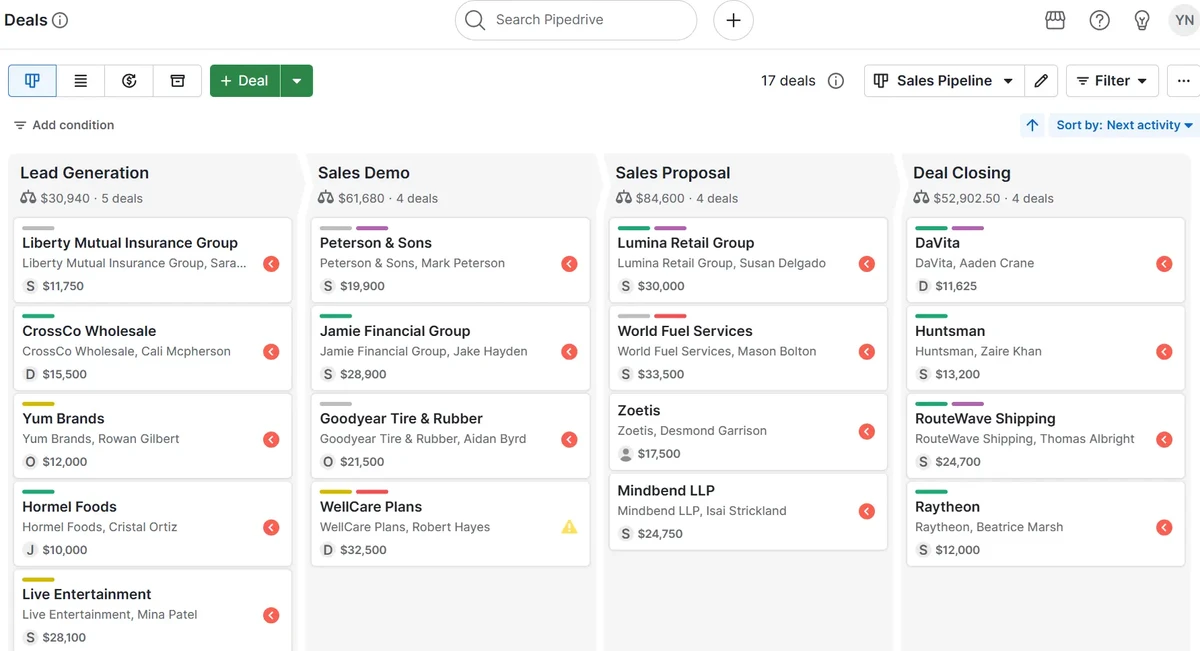
A CRM supports B2B lead generation by centralizing prospect interaction data into a single system of record and automating the workflows that move contacts from initial capture to sales engagement. By synchronizing inbound marketing channels with outbound sales operations, the platform tracks touchpoints across the buying cycle and deploys automated dialing and callback management to prevent pipeline rot.
Connecting marketing touchpoints to active sales pipelines
A CRM is the central system of record that unifies customer touchpoint data while automating routine sales operations. Unlike standalone lead generation software that searches for new prospects to build pipeline from scratch before buyers know a company exists, a CRM stores, tracks, and manages ongoing prospect relationships and existing pipeline. Dedicated B2B lead generation platforms differentiate themselves from basic contact lists by delivering automated lead qualification, detailed prospect interaction tracking, and pipeline reporting that helps sales teams prioritize outreach.
Syncing marketing automation platforms directly with the CRM establishes a single source of truth across revenue operations. Marketing automation platforms focus primarily on nurturing known prospects through targeted email campaigns to drive conversion. Transferring those engagement events into the CRM creates coordinated prospect management from the very first marketing touchpoint through to opportunity close.
Sales execution also breaks down when representatives spend valuable selling hours on manual administrative overhead. Dedicated lead generation CRMs eliminate this drag through automated dialing, call wrap-up logging, and automated appointment setting. When sales teams rely on manual appointment booking, manual callbacks, and manual wrap-ups rather than automated dialers and workflows, response delays create pipeline rot. Automating call wrap-up and dialing next contacts directly inside the CRM frees up representative time for direct customer conversations.
Ingesting and enriching prospect records across acquisition channels
Inbound prospect data enters the CRM directly through embedded web forms and landing page builders that capture structured contact details at the moment of submission. Platforms like Salesmate offer web form builders supporting over 50 data fields alongside custom properties, so marketing teams can design targeted forms that funnel complete prospect submissions directly into the CRM database.
Outbound prospecting channels rely on browser extensions and automated capture tools to ingest prospect data without manual data entry. Sales representatives prospecting on professional platforms like LinkedIn deploy tools such as the Lusha browser extension to look up individual direct dials and verified business email addresses, exporting those contact details directly into CRM account records individually or in bulk.
Integrated B2B sales intelligence platforms expand outbound prospecting by injecting organizational growth signals, intent triggers, and verified data into the CRM before sales outreach begins. Intelligence providers such as Lead411 and ZoomInfo supply real-time verified contacts and intent data that highlight in-market accounts. ZoomInfo tracks over 500 million verified B2B contacts and more than 100 million company profiles, processing over 1.5 billion data points daily through a reasoning layer to detect active buying signals.
Continuous automated write-back of enriched firmographic data into core CRM fields maintains database integrity across all acquisition channels. When prospect records enter the system with missing job titles, empty company size fields, or unverified email domains, rule-based scoring models fail silently and time-decay calculations drift. Automated write-back ensures that firmographic attributes are complete, activity timestamps stay accurate, and negative filtering rules intercept personal email domains before low-quality submissions inflate pipeline figures.
Scoring prospect engagement and automating sales rep distribution
Composite lead scoring combines demographic fit, behavioral activity, and purchase authority into a weighted numeric score to prioritize sales rep outreach. Lead scoring acts as a precision prioritization layer on top of baseline qualification rather than a replacement for it. The resulting score dictates how rapidly sales development representatives act on an inbound contact, which messaging strategy they apply, and what priority level the opportunity receives.
Rule-based scoring models evaluate both positive qualification signals and negative disqualification factors across specific attributes:
- ICP job title (+20 points): The prospect holds a decision-making title such as Vice President, Director, or Head of department.
- Target company size (+15 points): The prospect’s organization matches the ideal target range of 50 to 500 employees.
- Pricing page visit (+20 points): The prospect visits commercial pricing pages, showing bottom-funnel interest.
- Demo request (+30 points): The prospect directly submits an inbound request to see the product.
- Individual contributor role (−15 points): The prospect lacks decision-making authority, triggering a point deduction.
Point thresholds convert these cumulative calculations into distinct funnel stages. An inbound lead qualifies as a Marketing Qualified Lead (MQL) at 50 points, while active prospects reaching 75 points qualify as Sales Qualified Leads (SQLs) for expedited routing. For example, consider an inbound prospect who is a Director of Operations at a company matching the ideal target range of 50 to 500 employees. The contact earns +20 points for an ICP title and +15 points for target company size. When that prospect visits the pricing page, adding +20 points, the score crosses the 50-point MQL threshold. When that prospect submits a demo request, adding +30 points, the score surpasses the 75-point SQL threshold and triggers immediate sales handoff.
In contrast, an individual contributor at a company with 50 to 500 employees who submits a demo request earns +15 points for company size and +30 points for the demo, but receives a 15-point penalty for role authority (15 + 30 − 15 = 30 points). This total remains below the 50-point MQL threshold and prevents premature sales outreach.
Maintaining clean data is critical because a simple rule-based scoring model operating on complete CRM records consistently outperforms a machine learning model operating on incomplete records. Once a record reaches qualified status, automated routing software assigns the prospect to the proper sales representative. CRM-native platforms like LeanData apply rules-based logic to match incoming leads to existing accounts, handle territory hierarchies, manage inactive users, and respect capacity caps. Intent routing platforms like 6sense evaluate predictive account signals to determine whether an incoming record warrants a specialized sales motion or an expedited executive queue before rep assignment.